

 The rapid integration of artificial intelligence (AI) and machine learning (ML) into pharmaceutical research and manufacturing is reshaping how formulations are designed, tested, and optimized.
At this year’s CPHI in Frankfurt, delegates identified AI and ML as a major trend currently shaping the pharmaceutical industry. This article examines how Caleva’s bench top lab equipment can help researchers better integrate AI and ML into their formulation and process development.
Although AI and ML are already playing large parts in pharmaceutical research and development, the success of AI-driven discovery depends on the quality and consistency of the experimental data it learns from. This is where Caleva’s lab-scale equipment provides crucial value as they generate precise, reproducible data that bridges the gap between experimental science and digital intelligence.
Generating the Data that AI Needs
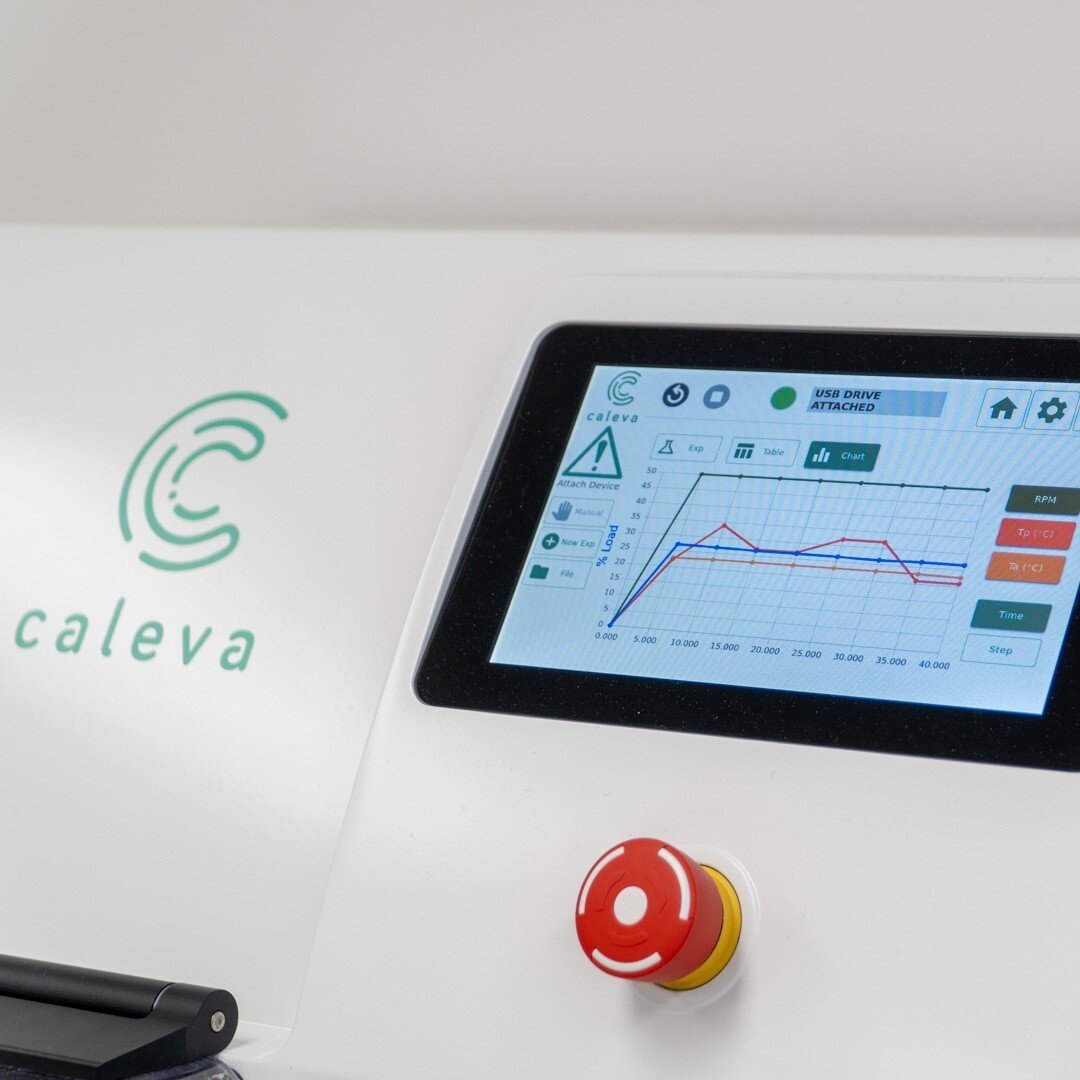
AI and ML systems thrive on high-quality datasets capable of revealing meaningful patterns. Caleva’s range of lab-scale equipment, including the Multi Lab series and Mixer Torque Rheometer, has been engineered to produce structured, quantifiable data across the key parameters of pharmaceutical formulation development.
Parameters such as torque of the wet granulation, motor load %, RPM speed, pump flow rate, and process temperature can be precisely controlled and recorded feeding AI with valuable data. This reliable, high-resolution data enables practitioners to model and predict formulation outcomes, identify relationships between composition and performance, and optimize process parameters using machine learning algorithms. In effect, every Caleva trial becomes a data-generating event that drives future insights.
Closing the Loop Between AI Prediction and Lab Validation
.jpg?width=600&height=300&name=Spares%20%26%20Services%20Email%20Banner%202%20(1).jpg)
AI can suggest promising formulations, but experimental validation remains indispensable. Caleva’s lab-scale systems make this step faster, more cost-efficient, and using less resources than ever before.
This creates an effective closed-loop workflow:
- AI proposes candidate formulations or process settings.
- Caleva lab-scale tests validate these predictions.
- The resulting data feeds back to refine the AI model.
By shortening this feedback cycle, researchers can accelerate development timelines while reducing waste. This synergy between AI prediction and Caleva validation transforms formulation discovery into a continuous, data-driven process.
Building Digital Twins and Predictive Models
Digital twins are transforming process understanding by allowing scientists to simulate pharmaceutical operations before scaling up. These digital replicas require comprehensive input data such as that provided by Caleva’s bench top lab equipment to be created.
With detailed digital records of mixing, extrusion and spheronization, researchers can construct robust digital twins that mirror the physical process in real time. This capability supports predictive scale-up whilst emulating the fit, form and function of production scale processes, process control, and real-time quality monitoring through Process Analytical Technology (PAT) initiatives, laying the groundwork for advanced, automated production systems.
Supporting Quality by Design and Smart Manufacturing
Quality by Design (QbD) principles rely on knowing how process variables influence critical quality attributes (CQAs). Caleva’s precision equipment enables researchers to systematically vary parameters and capture the data necessary for ML-driven QbD studies.
This empowers teams to develop predictive control strategies and implement smart manufacturing frameworks consistent with the goals of Industry 4.0. The actionable insights derived from these studies guide both digital transformation and regulatory compliance, ensuring that process intelligence evolves alongside experimentation.
Discover Caleva's Range of Equipment
From early-stage formulation trials to predictive process modelling, Caleva’s lab-scale systems enable the pharmaceutical industry to apply AI and ML in practical, measurable ways that deliver real value and a return on investment to formulation projects. By generating robust datasets and facilitating rapid validation, Caleva provides the bridge between traditional experimentation and the intelligent, data-driven manufacturing systems that define the next era of pharmaceutical innovation.
Caleva's range of lab equipment for formulation development includes the Mixer Torque Rheometer, the Multi Lab Scientific, and the Multi Lab Classic. This range all have a similar small batch size requirement which saves you time, materials, and money. This is particularly useful when working to a tight deadline, or when using scarce or expensive materials.
Contact us for more information on how our equipment can help deliver your formulation development using AI and ML.


Leave A Comment