




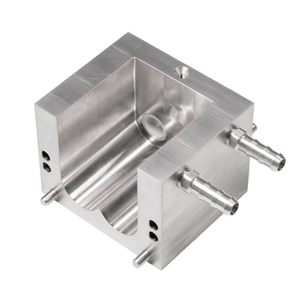
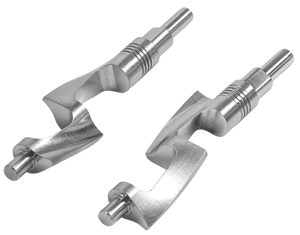
Designed for demanding chemical and catalyst applications, the Chemical (Sigma) Mixer Attachment is engineered to process abrasive materials that can accelerate component wear and increase mechanical load on standard mixing systems.
The attachment features Sigma blades made from 431 stainless steel for enhanced wear resistance to support longer component life. An optimised blade profile effective mixing performance while reducing load on the motor, helping to minimise mechanical stress during processing.
For heat-generating formulations, the water jacketed bowl can be connected to a recirculating pump to maintain a controlled processing temperature, supporting greater process consistency and material stability.
The Chemical Mixer Attachment is fully compatible with the Multi Lab Classic (MLC), Multi Lab Scientific (MLS) and Mixer Torque Rheometer (MTR) providing straightforward integration without modification. It is also compatible with the original Caleva Multi Lab (CML).
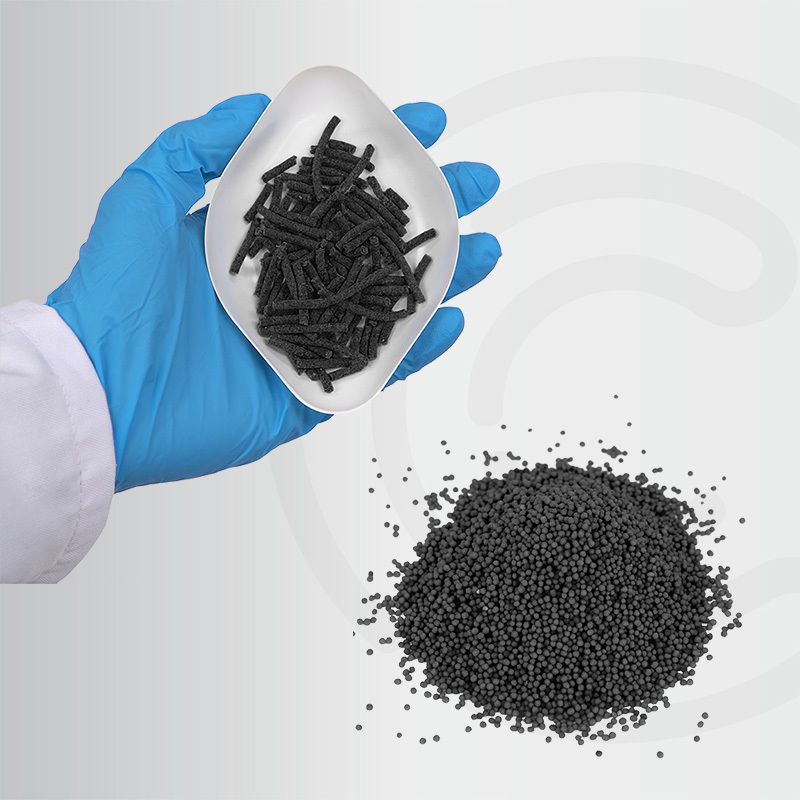
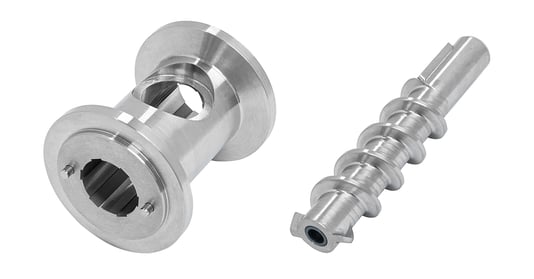 Designed for demanding chemical and catalyst applications, the Chemical Screw Extruder is engineered to process tough, abrasive formulations that can accelerate wear and challenge material flow in standard extrusion systems.
The attachment features a screw including a pressing cam with twin lobes and grooved auger tube that work together to improve material transport. The twin-flight screw creates dedicated transport and processing zones, while the grooved auger barrel interior increases friction to promote efficient movement of difficult-to-extrude materials.
To withstand abrasive formulations, the auger screw is manufactured from 17-4PH stainless steel to help reduce component wear and extend service life.
Together, these features support smoother material flow, improved extrusion consistency and more reliable processing performance when working with challenging chemical formulations.
Compatible with the Multi Lab Classic (MLC), Multi Lab Scientific (MLS) and original Caleva Multi Lab (CML), the Chemical Screw Extruder integrates seamlessly without the need for additional modifications.
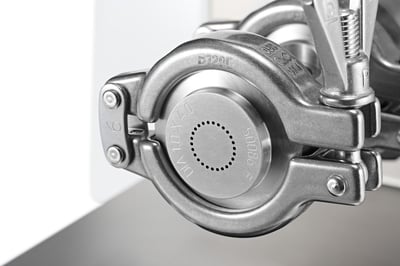
The Chemical Screw Extruder is compatible with a range of die configurations to support different product requirements.
The Chemical Kit replaces the standard 1.0mm x 1.0mm die face with a deeper 1.0mm x 4.0mm die, creating a longer extrusion path that increases compaction.
Additional die sizes are available from 0.5mm to 3.0mm, providing flexibility for different formulation and process development requirements.
For applications requiring increased surface area, optional trilobe and quadrilobe dies are available. These die designs can improve mass transfer during catalytic reactions and support the development of products with targeted surface area, density, mechanical strength, MOF length and pressure-drop characteristics for reactor applications.
Die options are compatible with all extruder attachments for the Multi Lab Classic (MLC), Multi Lab Scientific (MLS) and original Caleva Multi Lab (CML)
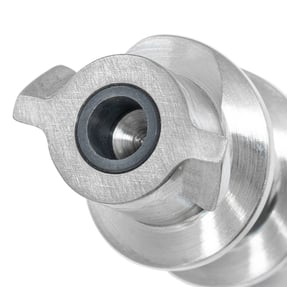 For applications involving abrasive formulations or chemically aggressive materials, optional harder wearing bushes are available across the Caleva range.
Manufactured from high-performance materials, these bushes offer excellent wear resistance and chemical compatibility, making them well suited to demanding formulation development applications.


Using the CML and MTR in combination we’re learning a lot about our catalyst material. The machines are easy to use, and we have achieved very accurate measurements, giving us precise repeatability. The MTR has been a massive advantage in our research and we’re doing things with the material we didn’t think were possible. The speed and ease of use have allowed us to conduct numerous experiments in a single day - we’ve accumulated vast amounts of data to inform our scale up. Both the CML and MTR are manufactured to a very high standard and are very dependable.
IGTL Technology LTD
When transferring a new technology from R&D into production, process flexibility and equipment adaptability are key. Caleva was a true partner, working with us to find a creative solution to a difficult engineering problem.
Erik Koep Chief Executive Officer at Worn Again
In pig iron manufacturing, the physicochemical properties, such as particle-size distribution, wettability, and porosity, of raw powders often vary. This results in a large variation in the optimum water content for wet granulation of fine iron ore powders. We have demonstrated that the optimum water content for wet granulation of fine ore powders can be determined using the MTR, even when the raw ore powders varied.
Dr Nakamura Osaka Metropolitan University
Caleva were extremely nice and knowledgeable through presenting new technology and reliable products that achieve our client’s needs and satisfaction.
Qusay Kareem Knowledge House Engineering Supplies
Cert No. 1503
ISO 9001